Fiddle Heads
Fiddle heads, the shape of a fern as it comes out of the ground in spring. Crozier is another name, as the coiled up fern resembles the hooked staff of a bishop.
The growth of a fern from the emergent tip above the grown to a fully mature specimen takes about a month or so.
Here are five examples of fiddle heads: Top->Right->Next Row.
Christmas fern: Polystichum acrostichoides, Cinnamon fern: Osmundastrum cinnamomeum, Interrupted fern: Osmunda claytoniana
Ostrich fern: Matteuccia struthiopteris, Sensitive fern: Onoclea sensibilis, Royal fern: Osmunda regalis
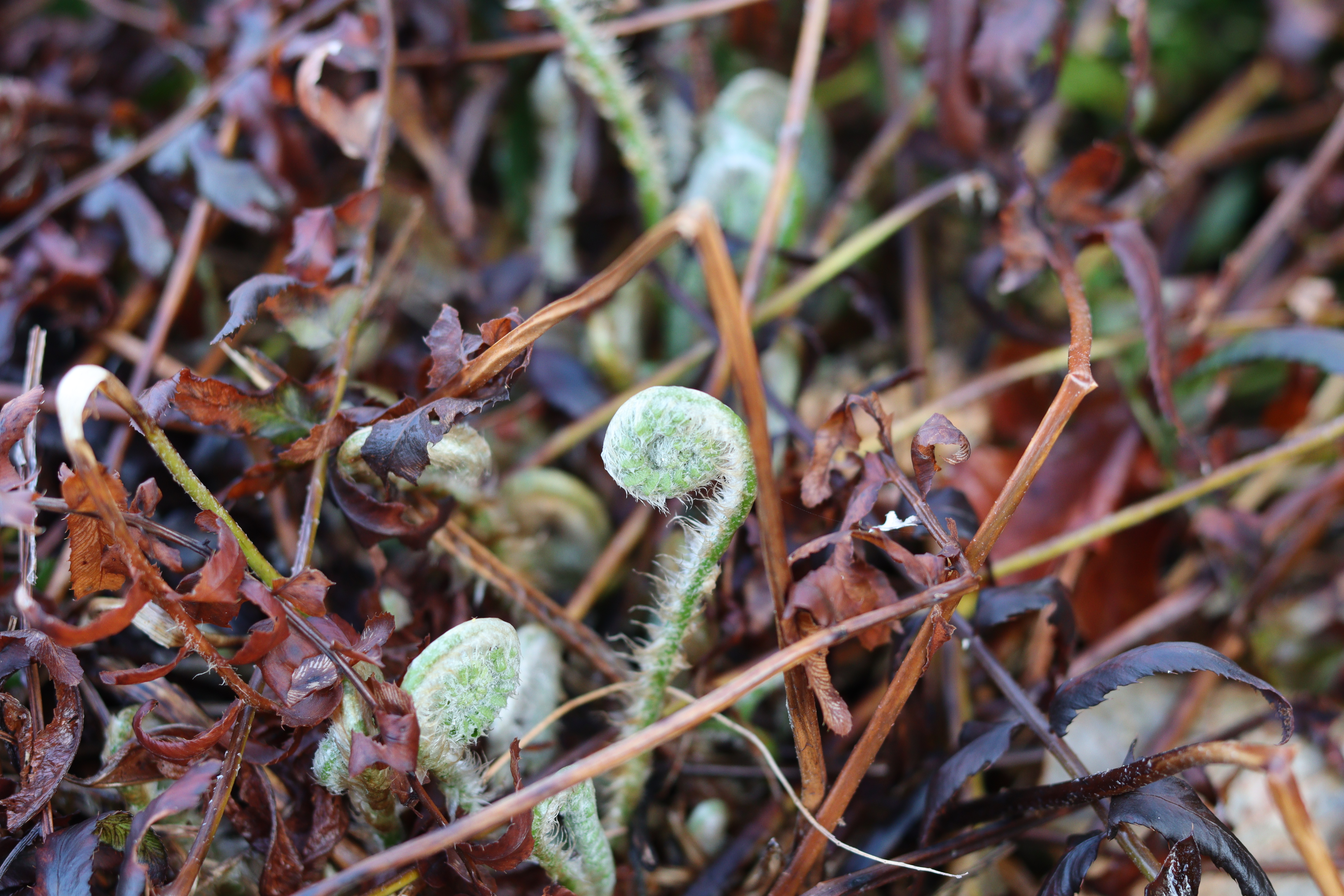
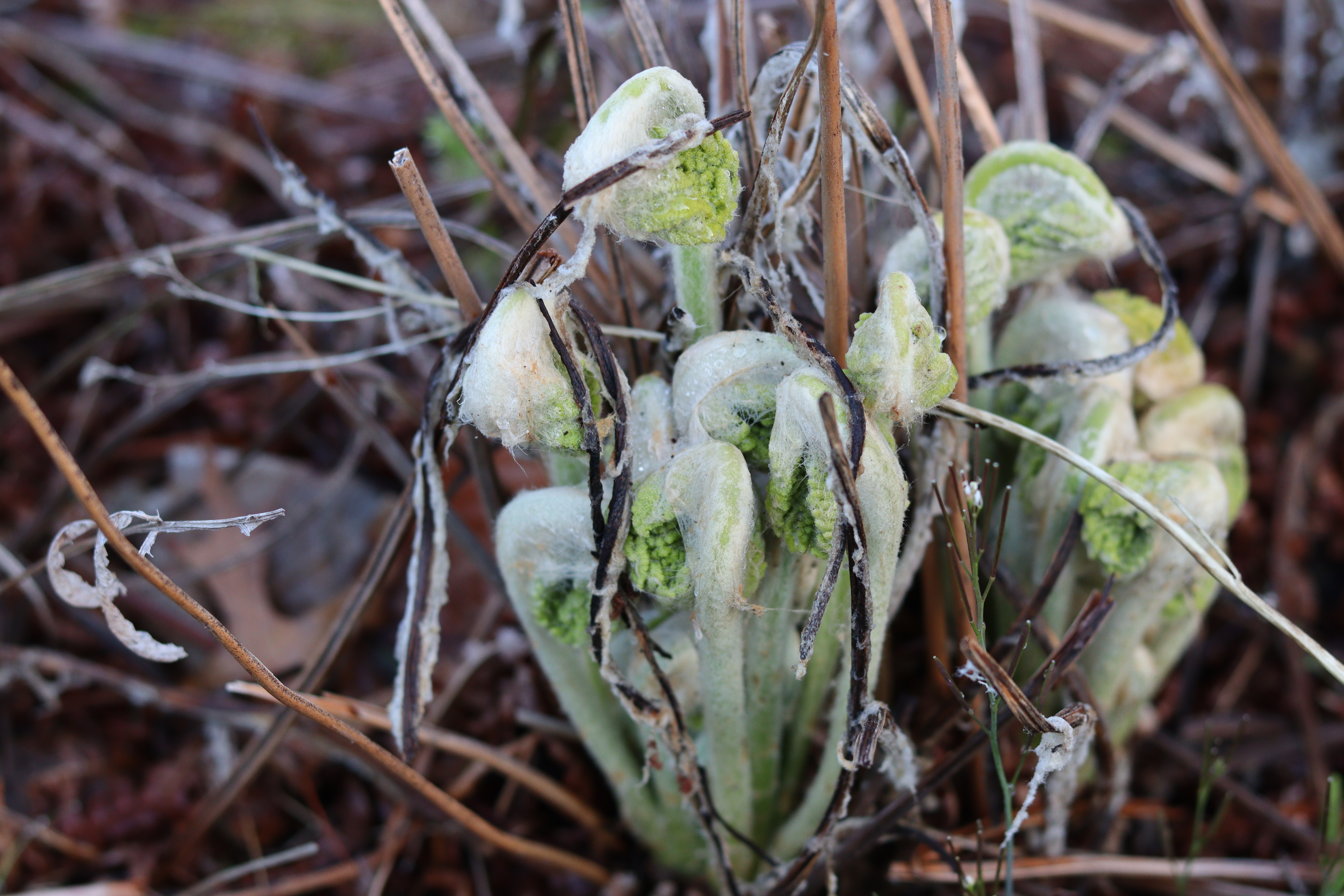
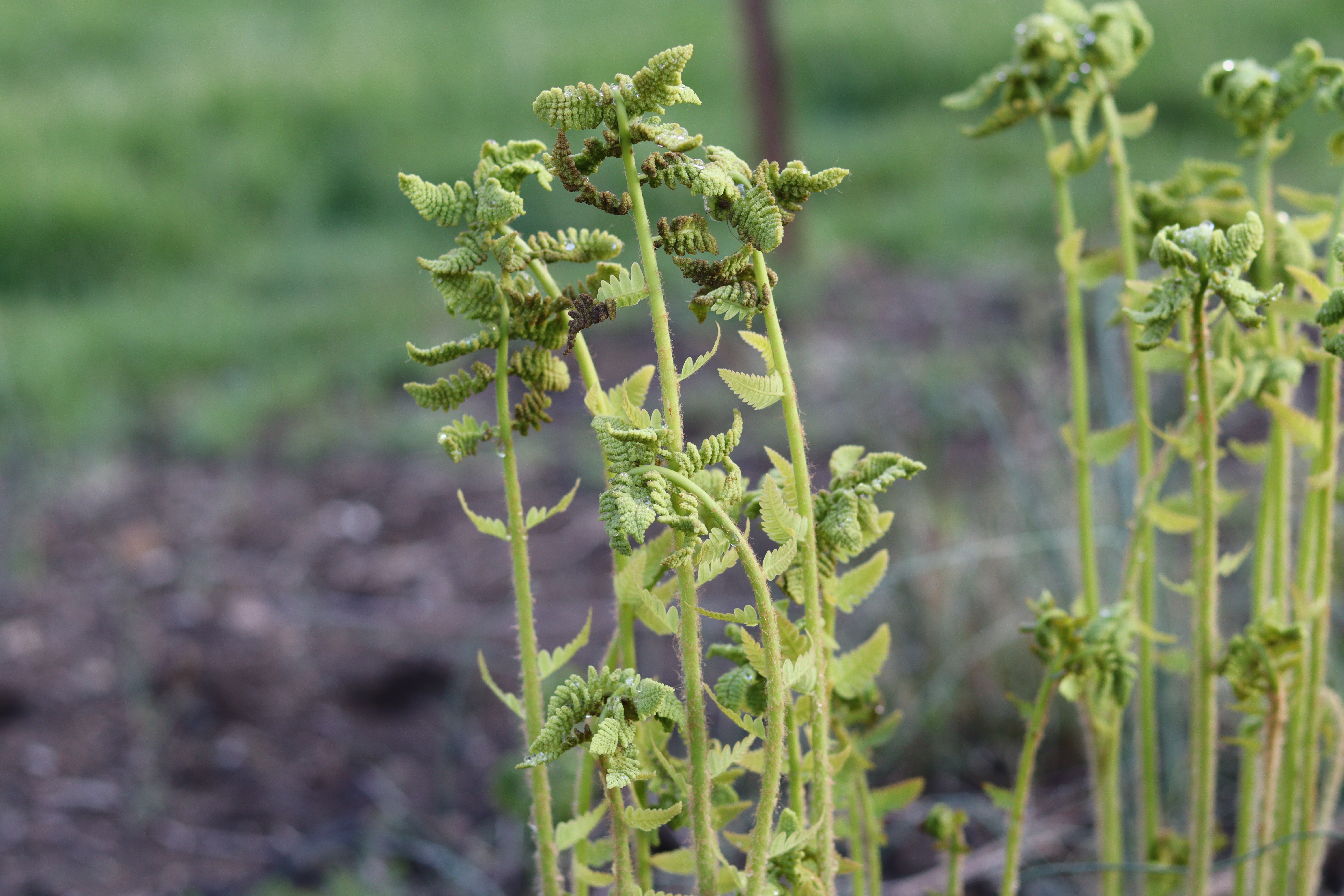
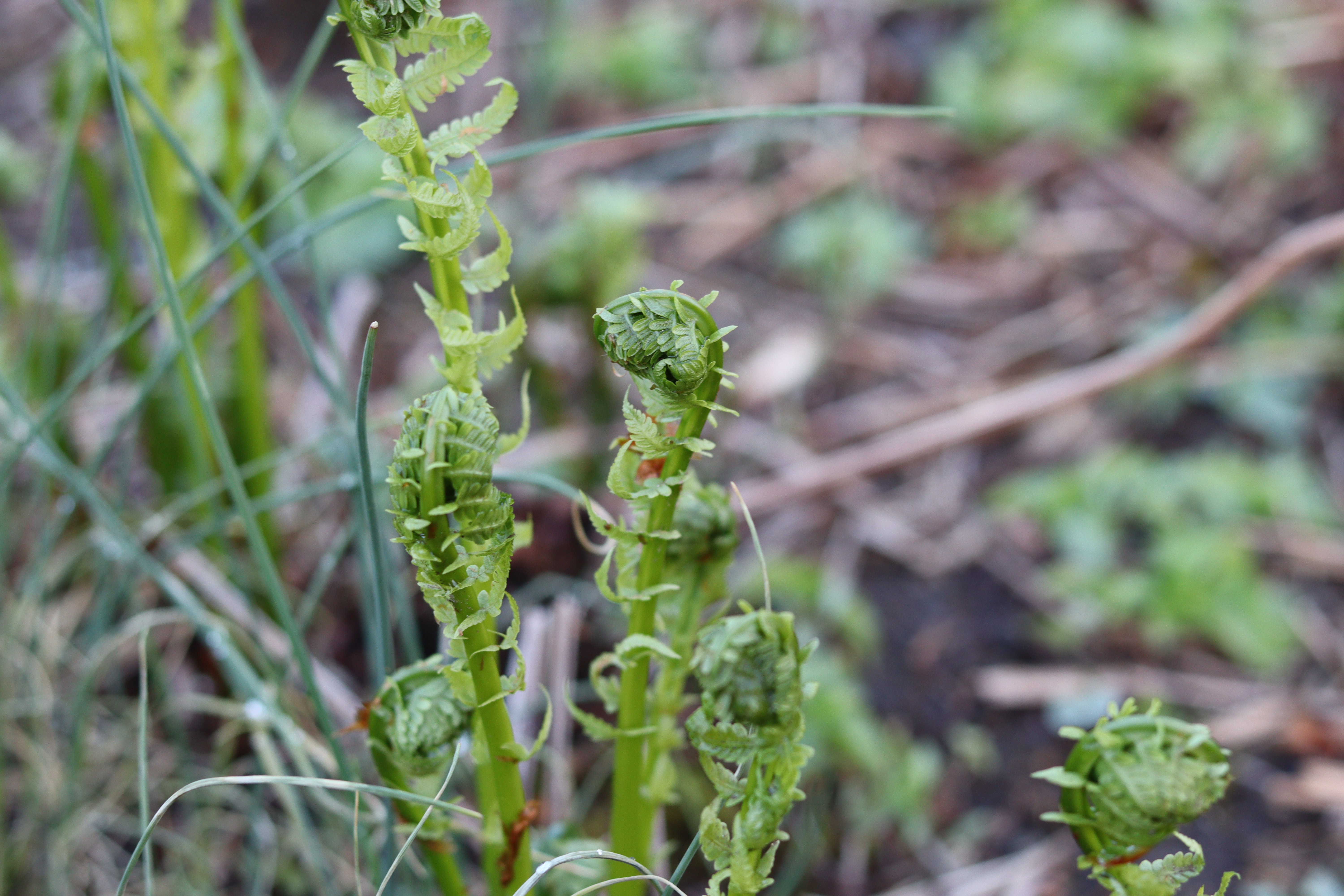
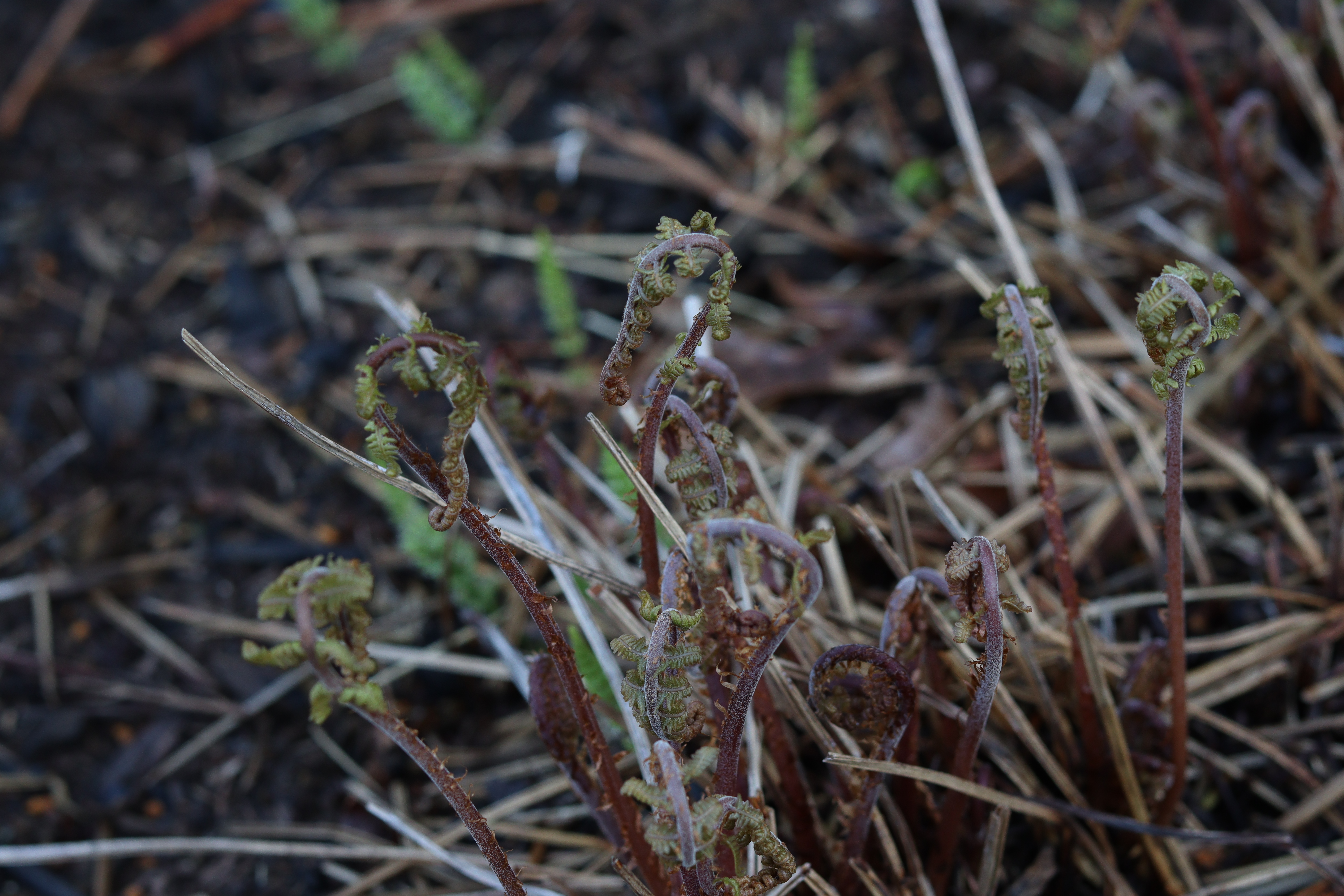
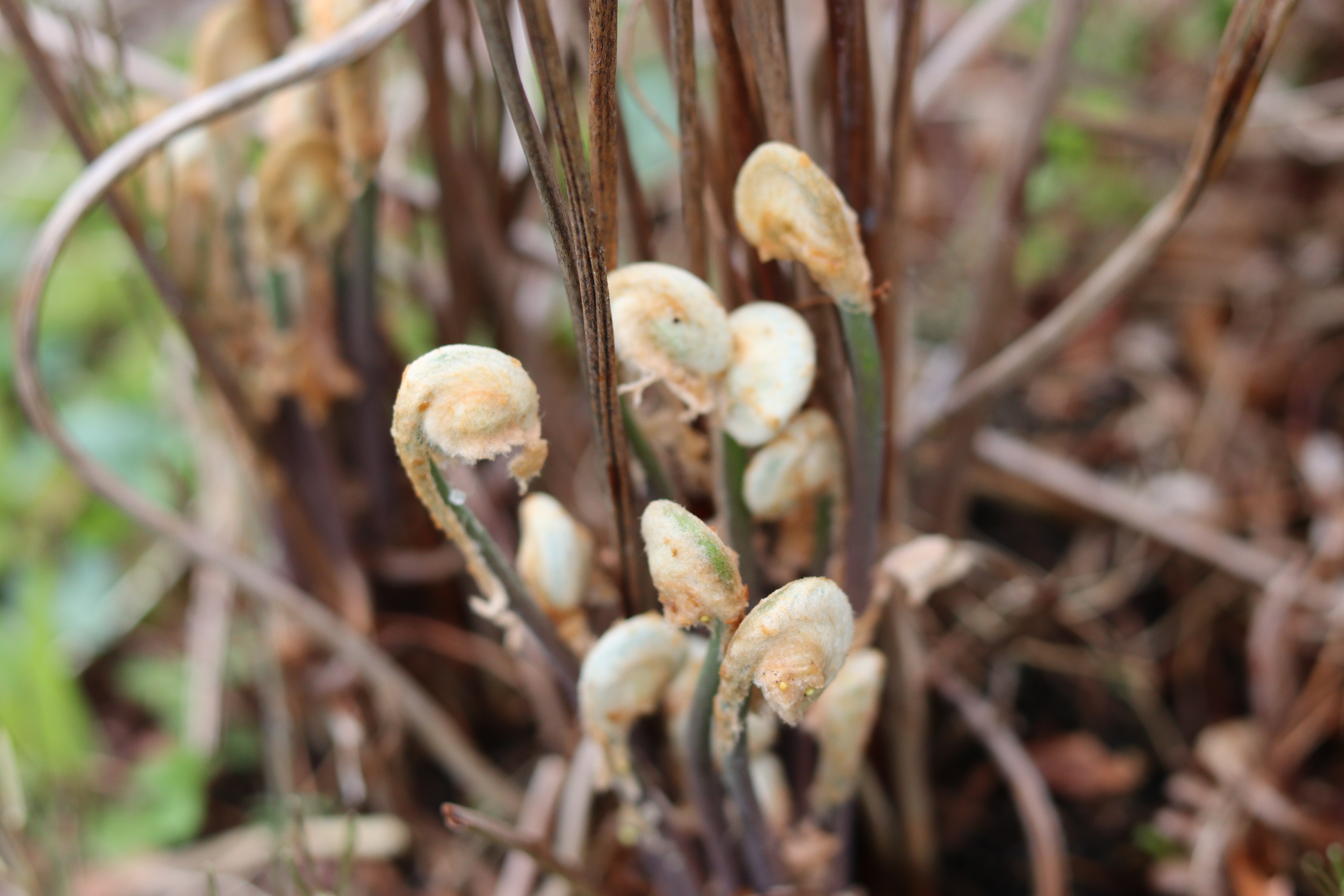
Only the Ostrich fern fiddle heads are edible. All other fiddle heads are poisonous. In some states there are laws stating this fact.
With some practice, one can recognize ferns before they are mature by recognizing the fiddle head. Other clues will be present too. Last years growth around the fiddle head help identify the fern.
Christmas fern will have some green fronds. The 'boot' pinna of green or dried fronds will be near by.
Cinnamon fern will be covered in white.
Interrupted fern unravels up the stalk.
The fertile stalks of the Sensitive fern or Ostrich fern will be close to their fiddle heads.
Royal fern has wiry stalks from last years growth in amongst the new fiddle heads.
Other ferns may have a tuft or mound of prior growth that is dense and 'spiky'. The tuft won't identify the fern, but will let you know a fern is here.
The above traits are found in other ferns and are not definitive. I have not seen a fern guide list diagnostics of the fiddle heads to identify a fern. The book "Ferns & Allies of the North Woods: A Handy Field Reference to All 86 of Our Ferns and Allies" by Joe Walewski has pictures of fiddle heads, one of few books that has such pictures.