Bracken Fern
Bracken fern, Pteridium aquilinum, is found in many places in the Eastern US, Western US, and Europe, but also elsewhere in the world.
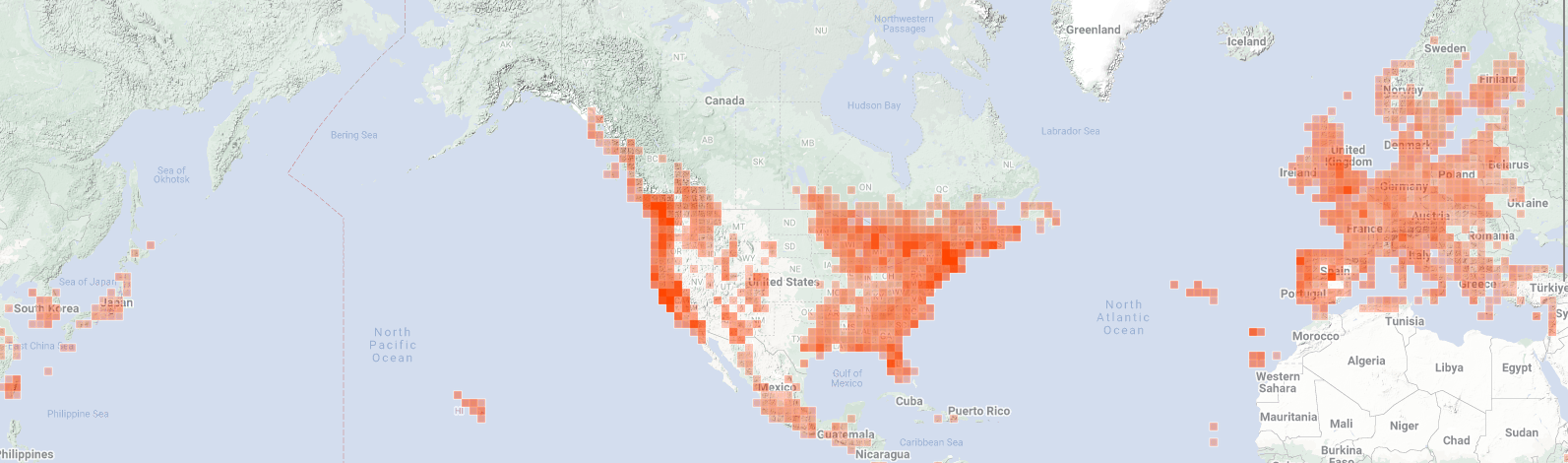 iNaturalist.org map of P. aquilinum
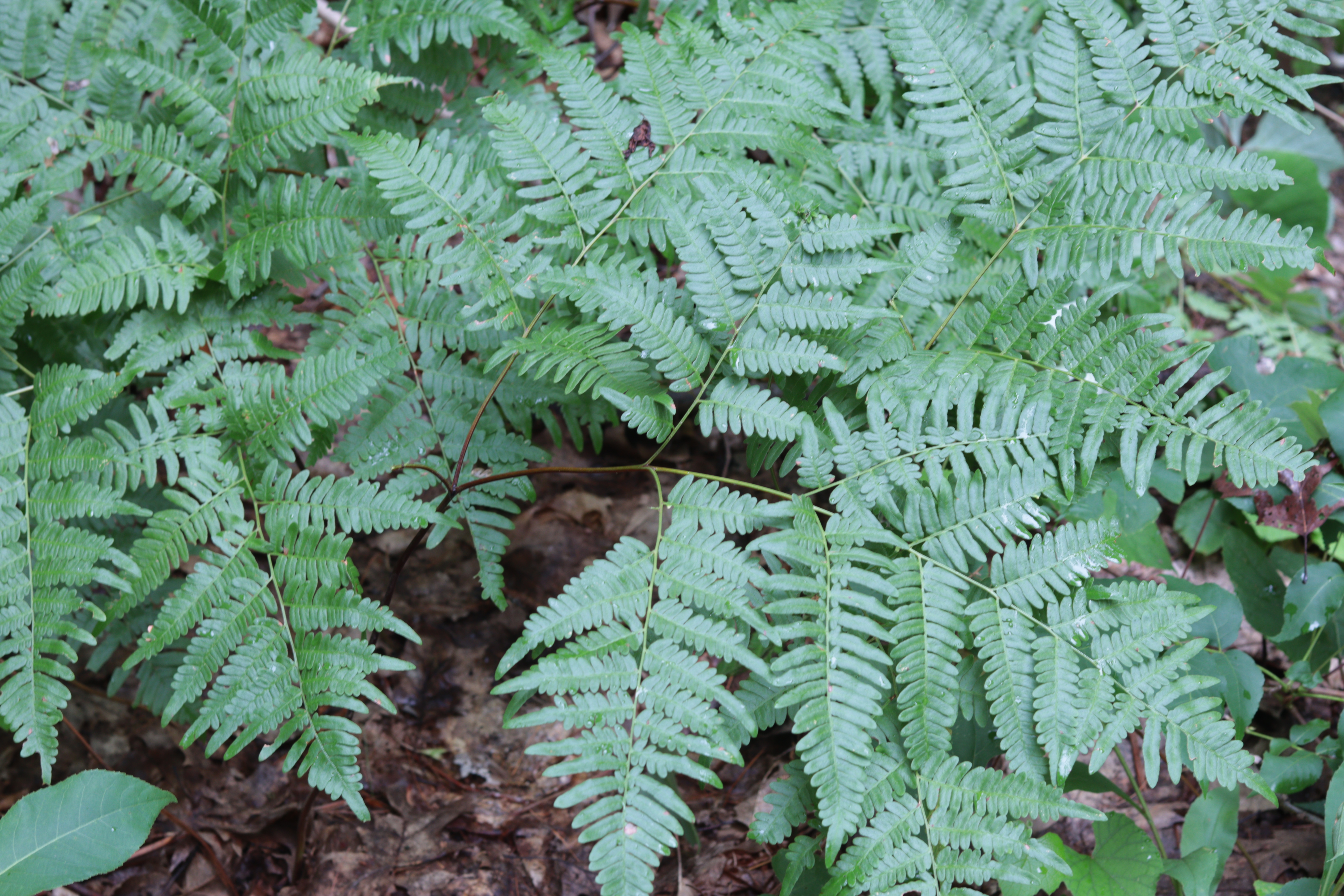 Mt. Toby, Sunderland, MA, USA
P. aquilinum has 3 fronds branching from the stipe. The bottom most pinna is different than the others.
Bracken can be invasive. It establishes itself in disturb soil. The rhizomes are deep and extensive. Difficult to eradicate once established.
Sori are rarely seen, but when present they follow the margin of the pinna with no indusium, like a thin line of paint.
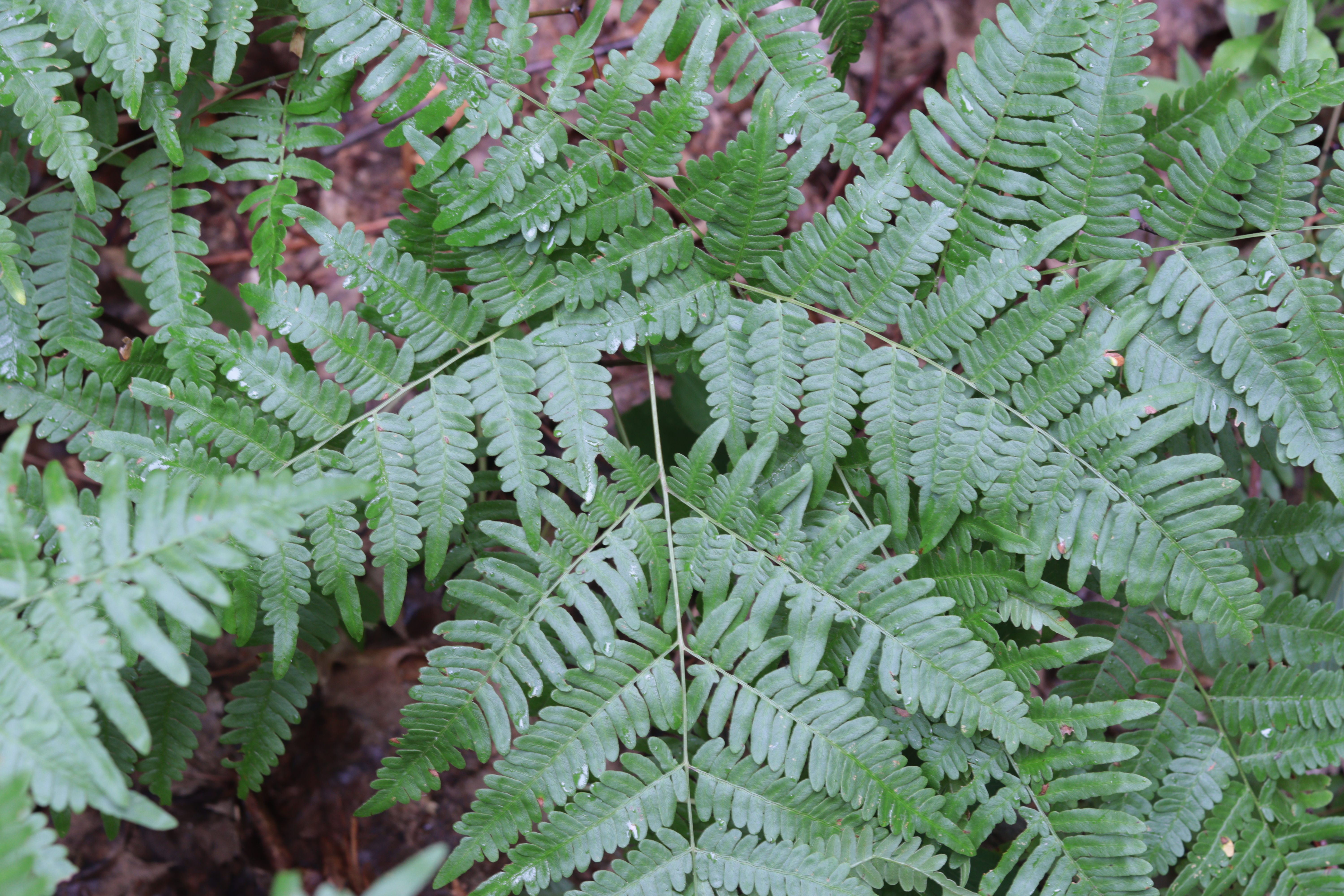 Mt. Toby, Sunderland, MA, USA
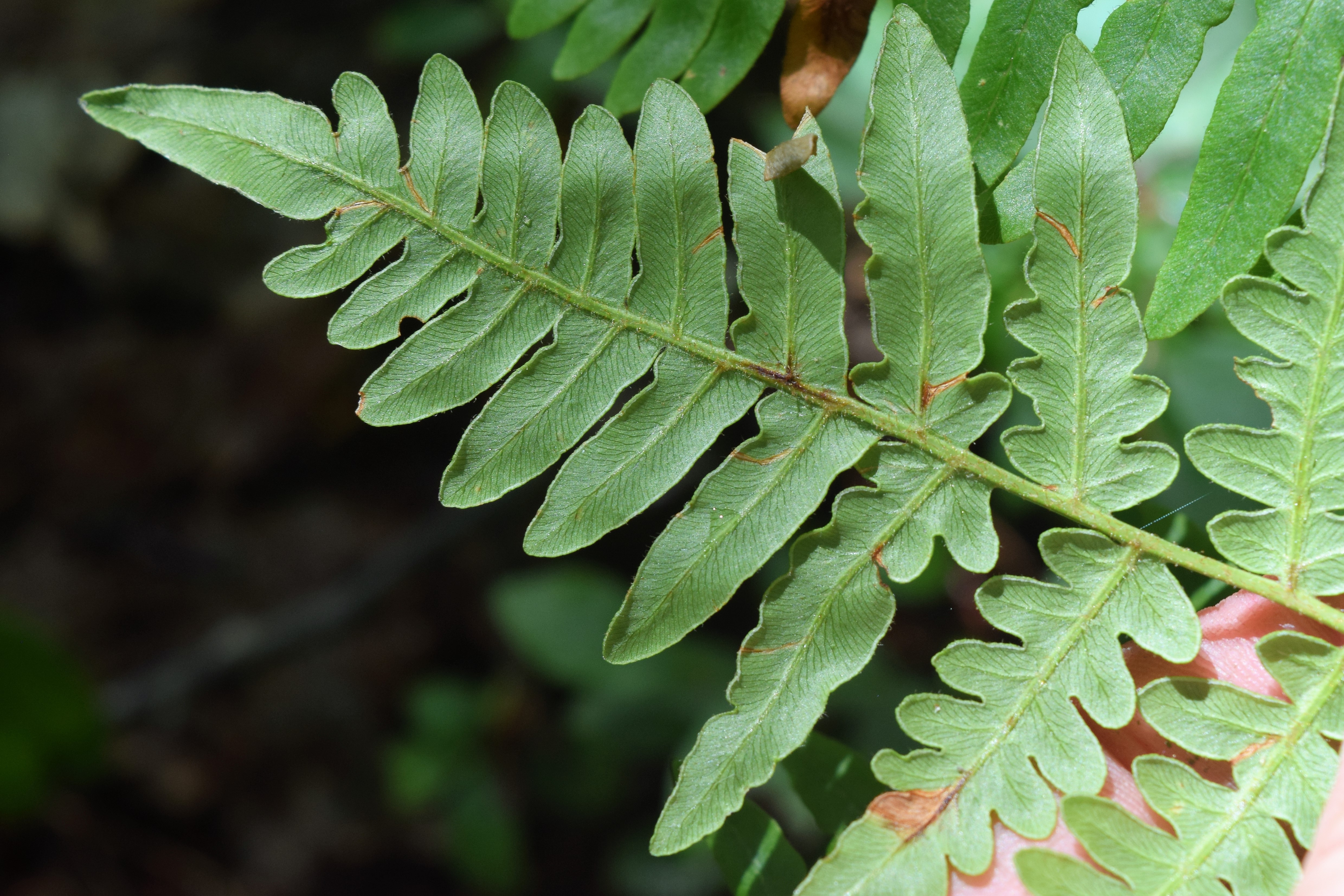 Kent Land Trust, Kent, CT, USA (Laurie Doss)
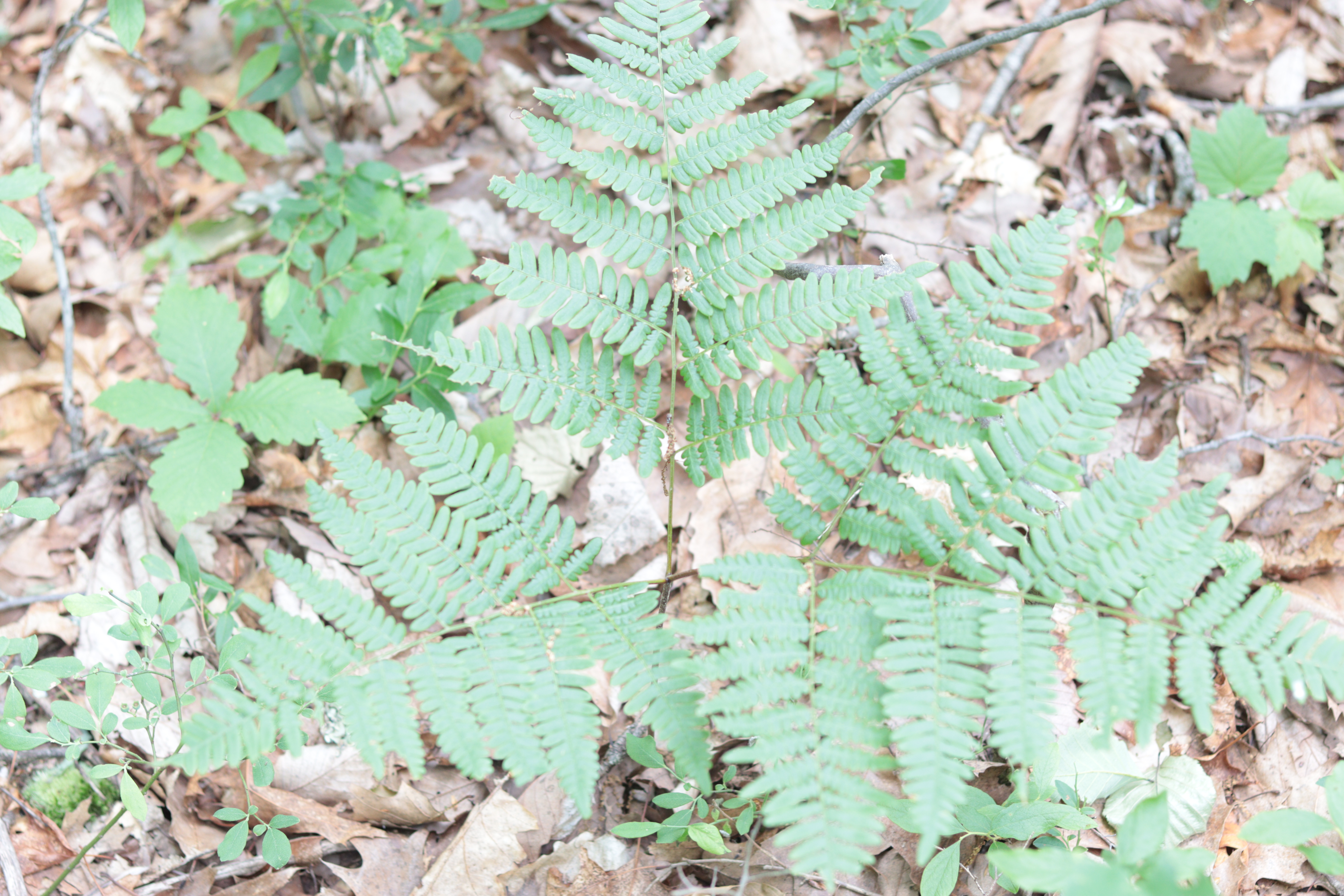
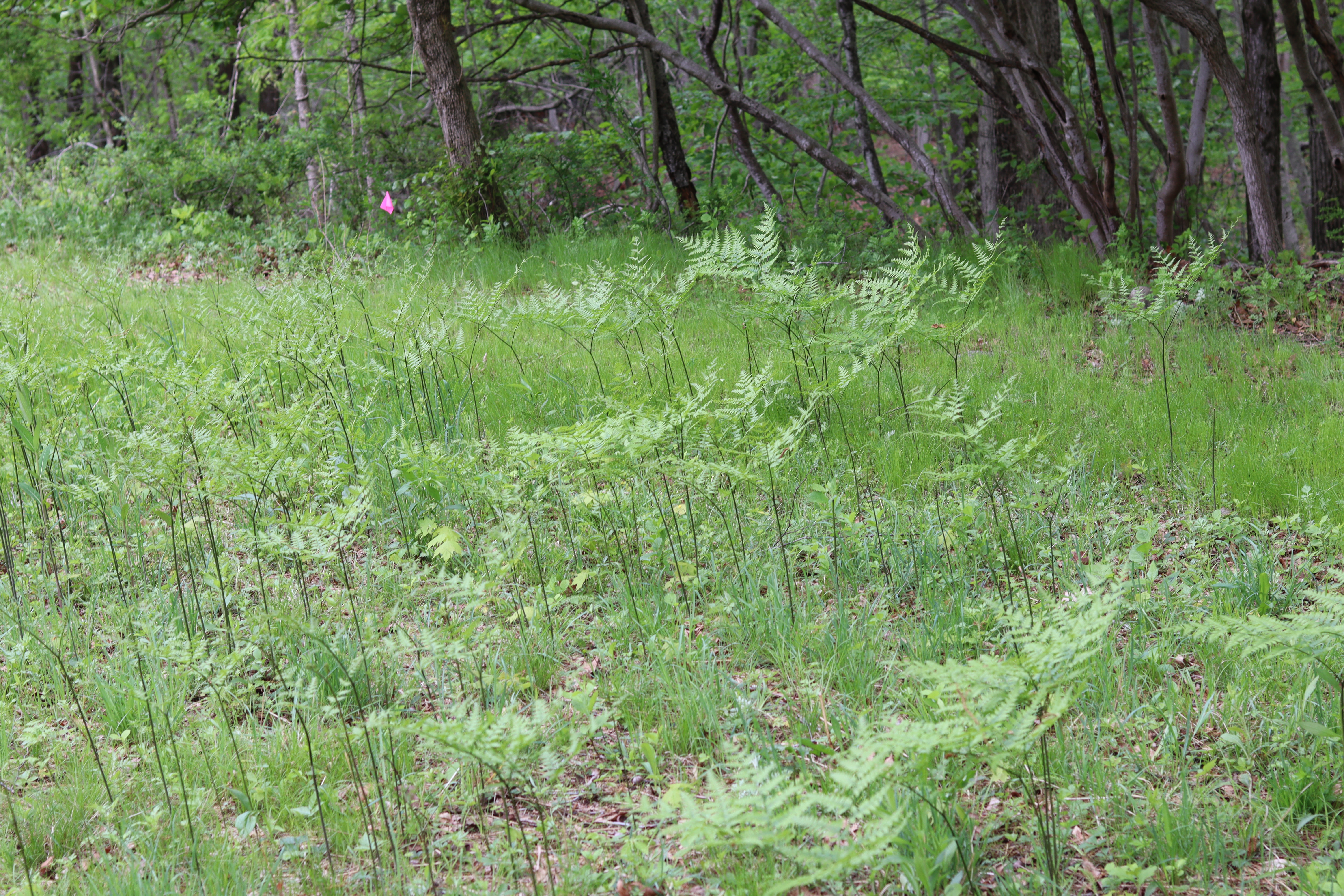 William J. Kupinse, Jr. & Patricia Kupinse Preserve, Easton, CT, USA May2025
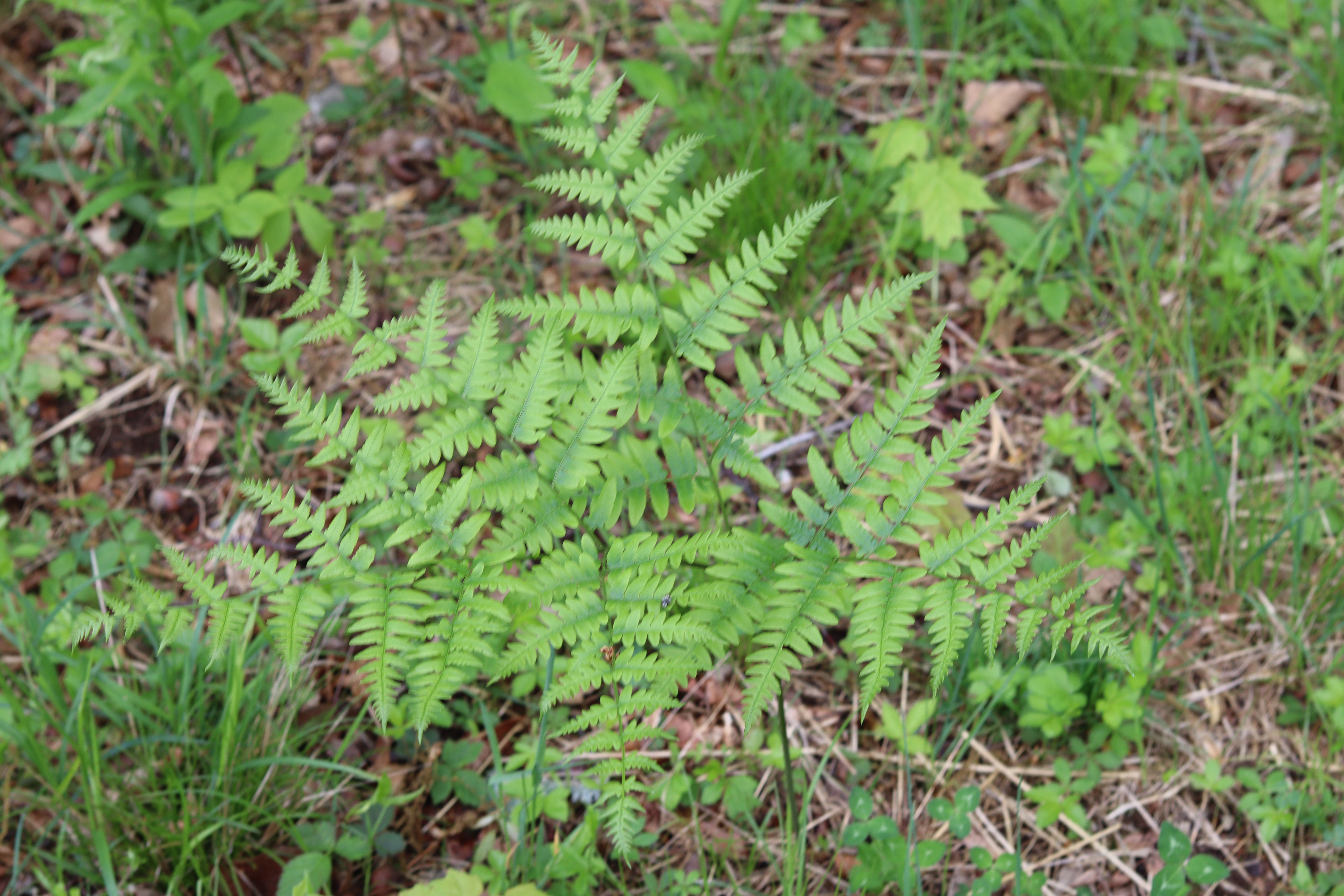 William J. Kupinse, Jr. & Patricia Kupinse Preserve, Easton, CT, USA May 2025
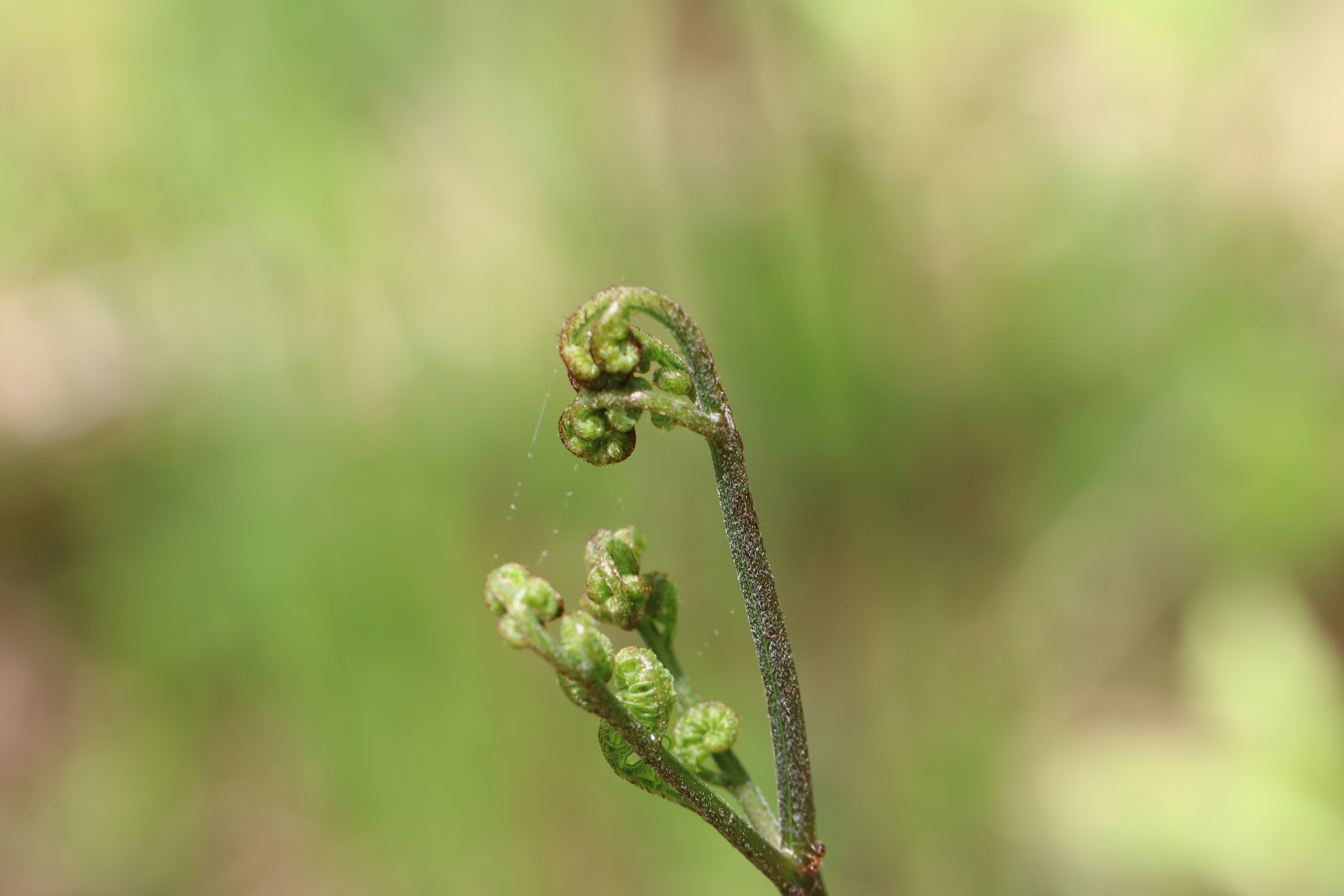 Fiddlehead, William J. Kupinse, Jr. & Patricia Kupinse Preserve, Easton, CT, USA May 2025
Note the ant at the intersection of the three stems. Bracken fern has extrafloral nectaries. Sugar attracts ants as protection.
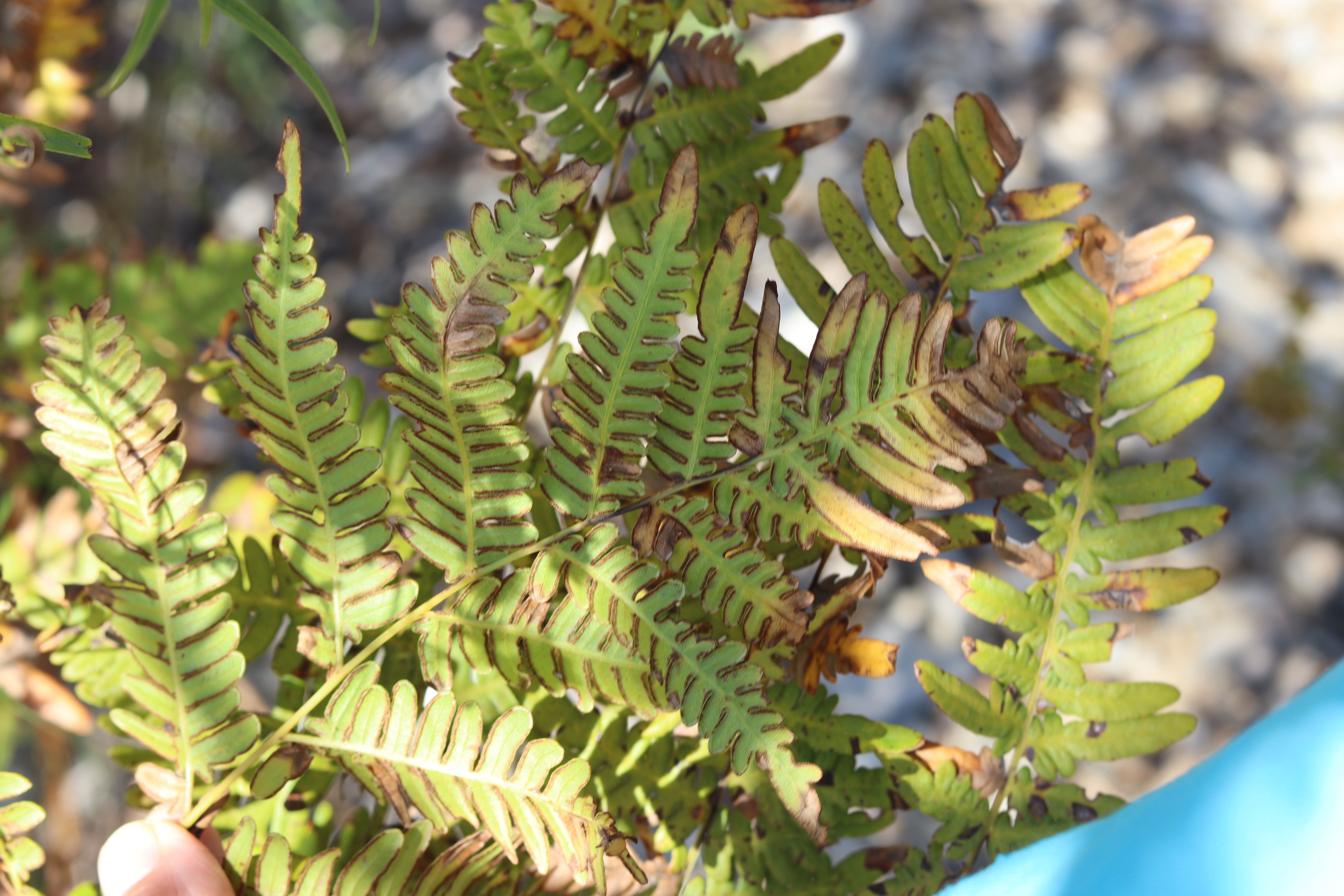 Coastal Maine Botanical Gardens, Boothbay, Maine, October 2025
The brown edge of the pinna on the frond is solid spores. Bracken spores are naked. No indusium or false indusium. Spores on bracken are not see often. The right conditions are necessary for bracken to produce spores, typically in direct sun. Lots of extra energy.